Can Clean Energy Eliminate All Rejected Energy? - GreenBuildingAdvisor
About this article
Understand energy flow in the US by studying Lawrence Livermore National Lab's charts. Discover the impact of rejected energy.
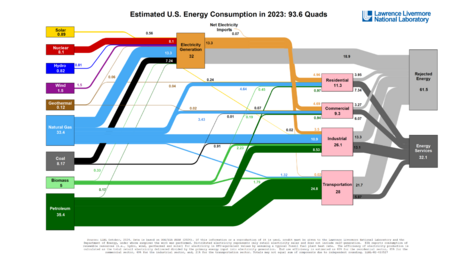
Building Science Can Clean Energy Eliminate All Rejected Energy? Most U.S. energy becomes waste heat—renewables change that equation. By Allison A. Bailes III, PhD | March 5, 2026 More Building Science Decades of Home-Performance Expertise Await You in Ohio 11 Ways to Screw Up an ERV Installation How to Keep Bugs and Critters Out of Your House 7 Ways Airtightness Improves Your Home To understand energy on a large scale in the US, you can’t do better than studying the energy flow charts from the Lawrence Livermore National Lab (part of the US Department of Energy). In the 2023 version above, you see the various fuels we use on the left. On the right you see the outputs. And the thing nearly everyone notices immediately is the huge chunk called rejected energy. The origin of rejected energy In a previous article on rejected energy, I explained why it’s there and how resistant it is to reduction as long as we keep our current fossil-heavy mix of fuels. “The first thing to understand is that the great majority of that rejected energy comes from burning fuels,” I wrote. Then we convert the heat of combustion to mechanical work in cars and other machines. Or we go a step further and turn the mechanical work into electricity. But we can’t ever use all of the heat energy we get from burning those fuels. Here’s what I wrote about that: As it turns out, we’ve known this limitation for nearly 200 years. A French kid† named Sadi Carnot figured out that there’s a limit on the efficien...