Passive House Accelerator: Unlocking Airtightness and Insulation - GreenBuildingAdvisor
About this article
Learn about airtightness strategies in passive house and the importance of choosing the right air barriers for successful projects.
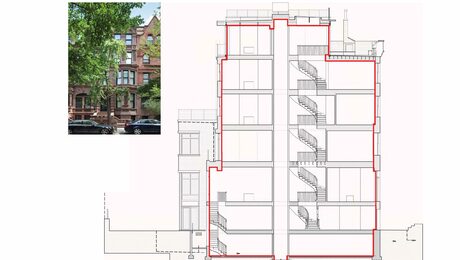
Guest Blogs Passive House Accelerator: Unlocking Airtightness and Insulation A look at materials, installation strategies, and testing methods that make airtightness achievable on real-world projects By Michael Ingui | April 17, 2026 More Guest Blogs Integrated Design for Residential Projects Passive House Accelerator: Modeling and Mechanical Design as a Path to Success Passive House Accelerator—Early Team Collaboration Is Essential Strategies for Sourcing Sustainably One of the starkest differences between passive house construction and standard construction methods is the focus on airtightness in passive house. Beyond hitting code minimums for airtightness (in New York State, code requires a maximum of 3 air changes per hour), many construction teams do not employ airtightness strategies into their buildings. Passive House in Carroll Gardens, Brooklyn during construction and after completion. Image credits: Ingui Architecture and Allyson LubowI sat down with Kevin Brennan, Director of Building Systems and Performance at Source 2050, to demystify airtightness. Kevin began his career as an FDNY firefighter and training specialist at the Association for Energy Affordability, before becoming one of the leading Passive House Tradesperson instructors and air sealing & insulation subcontractors in New York.Kevin describes what he sees as the most intimidating aspects of passive house airtightness strategies: first, it is unfamiliar to many general contractors and project manage...