Seismic event: Japan’s first two-storey 3D-printed house approved
Summary
Japan has approved its first two-storey 3D-printed house in Miyagi Prefecture, designed to meet strict seismic standards, showcasing advancements in construction technology.
Why It Matters
This development is significant as it demonstrates the potential of 3D printing technology in earthquake-prone regions, addressing housing needs while ensuring safety. It reflects a shift towards innovative construction methods that can enhance resilience against natural disasters.
Key Takeaways
- The house meets Japan's stringent seismic design requirements.
- Utilizes 3D printing technology for reinforced concrete construction.
- The design draws inspiration from natural cave structures.
- Kizuki plans to expand 3D printing applications beyond residential buildings.
- The project highlights the readiness of 3D construction printing for precise structural needs.
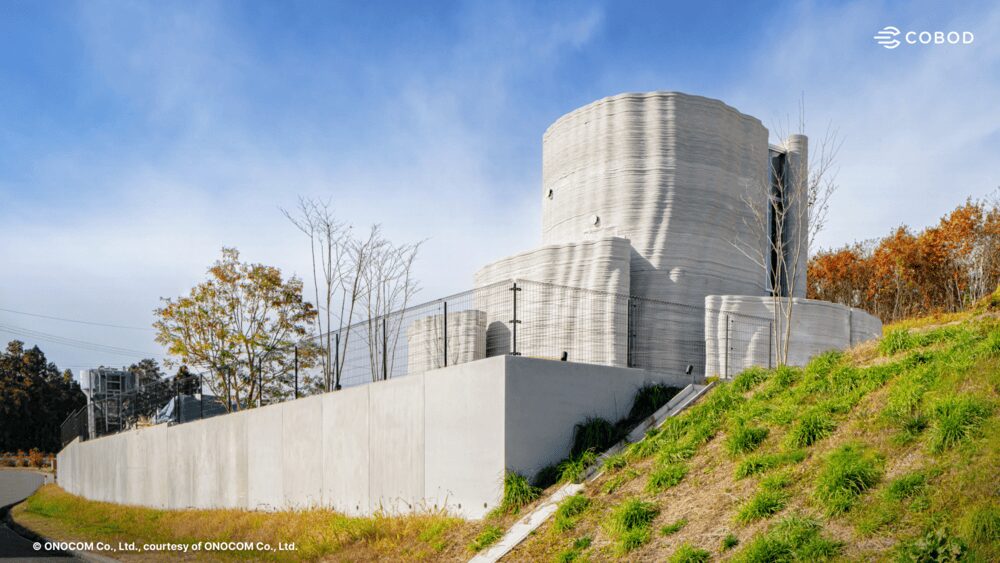
News Seismic event: Japan’s first two-storey 3D-printed house approved Joe Quirke 13.02.26 The exterior of the 50-sq-m two-story 3D-printed home contains layered concrete walls and curved geometry (All images courtesy of Cobod/Onocom) Japan’s first two-floor, 3D-printed reinforced concrete house has been completed in Miyagi Prefecture, meeting the government’s strict seismic design requirements. Concrete printing startup Kizuki made it with builder Onocom using a custom Cobod 3D-printer, enabling printing from half a metre below ground to a height of 7m. They used 39 cu m of material to get a total printed area of 50-sq-m, with a four-person team operating the printer in temperatures ranging between 10°C to over 35°C. Interior view of the master bedroom with en-suite bathroom The ground floor measures 31 sq m, the upper floor 19 sq m. The design is inspired by caves, with 3D printed arches printed longitudinally, slabs for the roof and floor, and interior elements printed to extend the curved geometry. A press release sent to GCR said the project showed that 3D-printed reinforced concrete can act as an alternative to traditional timber construction because it met seismic requirements in earthquake-prone regions. Kizuki now plans to create more 3D-printed structures with broader applications. The cave-inspired architectural concept is repeated throughout the building Rika Igarashi, Kizuki’s chief executive, said: “Based on the knowledge gained through our recent residential...