Sitegeist: Munich construction robotics startup secures €4 million
Summary
Munich-based construction robotics startup Sitegeist has secured €4 million in pre-seed funding to develop automated robots for concrete restoration, addressing critical infrastructure repair needs in Europe.
Why It Matters
The article highlights the urgent need for innovative solutions in the construction sector, particularly for infrastructure repair. With Europe facing a significant backlog in concrete restoration and a shortage of skilled labor, Sitegeist's technology could enhance efficiency and safety in construction, making it a timely development in the industry.
Key Takeaways
- Sitegeist has raised €4 million to develop robotic systems for concrete restoration.
- The technology addresses critical infrastructure repair needs in Europe, where skilled labor shortages are prevalent.
- Sitegeist's robots adapt to complex geometries and varying conditions, enhancing operational efficiency.
- The startup is a spin-off from the Technical University of Munich, leveraging strong robotics expertise.
- Investors see significant potential in automating labor-intensive tasks in the construction sector.
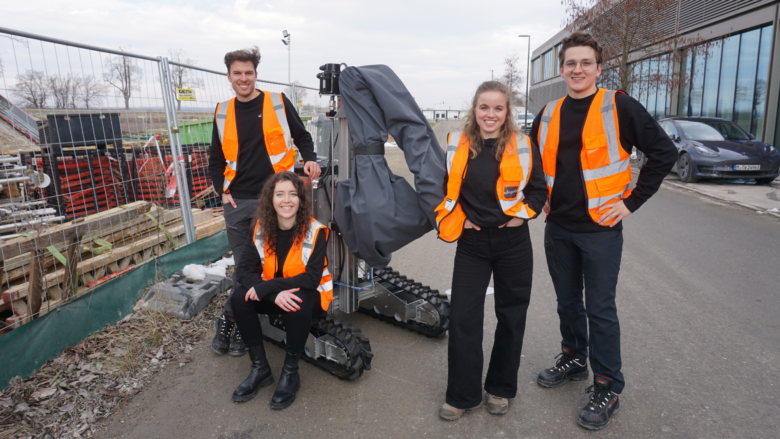
Das Sitegeist-Team. © Sitegeist Munich-based construction robotics startup Sitegeist has secured €4 million in a pre-seed round. b2venture and OpenOcean are leading the financing, supported by business angels and strategic investors from the construction and robotics sectors. The fresh capital will flow into team building and scaling automated robot systems on real construction sites. The technology addresses a massive bottleneck: Europe’s infrastructure is deteriorating faster than construction companies can repair it. Critical bottleneck in concrete restoration Bridges, tunnels, and public buildings across Europe face significant repair needs. In Germany alone, the backlog of repairs amounts to several hundred billion euros, according to KfW data from 2025. At the same time, a shortage of skilled workers is dramatically worsening the situation. Concrete restoration requires the highest precision: damaged concrete must be removed using high-pressure water jets or abrasive methods without damaging the underlying steel reinforcement. This work is performed almost entirely manually today, is highly site-specific, and is difficult to scale. “There is a critical bottleneck in maintaining our infrastructure, particularly in concrete restoration,” says Dr. Lena-Marie Pätzmann, co-founder and CEO of Sitegeist. Construction companies are often booked months or years in advance. Sitegeist relies on automated, modular robot systems that work directly on existing structures. Unlike c...